
Treatment of temporomandibular joint disorders
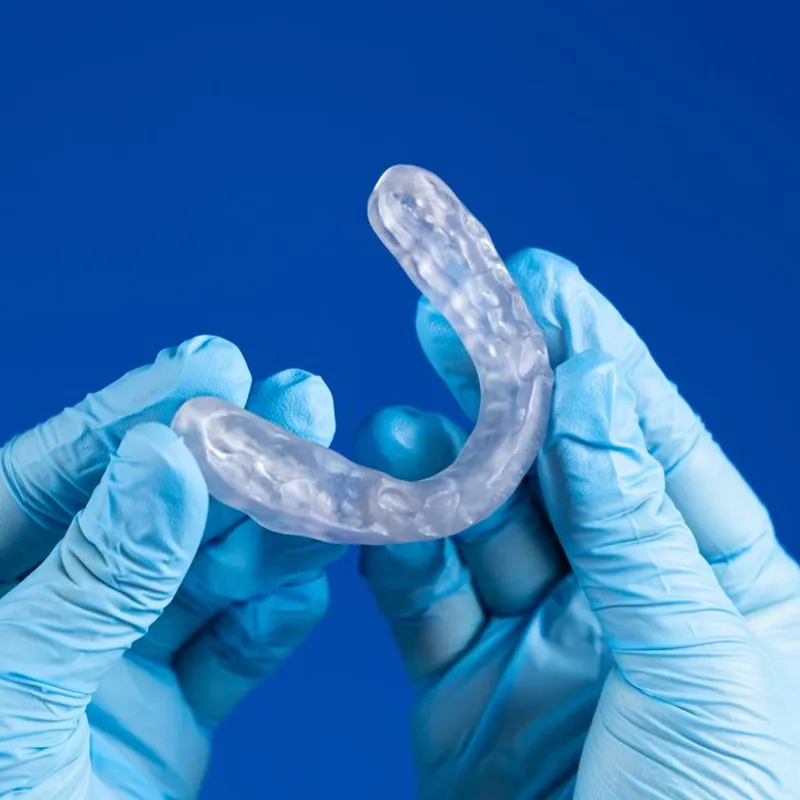
Treatment of temporomandibular joint disorders.
A modern perspective on jaw function and pain.
Jaw pain, limited mouth opening, locking, or joint sounds may be associated with various temporomandibular disorders (TMD). Their causes and the need for treatment can vary, so it is important to establish a specific diagnosis.
At Mažoji Užupio klinika, diagnosis and treatment for TMD and orofacial pain are provided. The condition of the temporomandibular joints and masticatory muscles is assessed, along with the nature of the pain, jaw function, and other factors that may influence symptoms.
Treatment is selected on an individual basis, prioritizing conservative, evidence-based methods.

Laurynas Jokubauskas
Prosthodontist
Who provides consultations?
Doctor, dentist and orthopedist Laurynas Jokubauskas
Specializes in the diagnosis and treatment of TMD, bruxism, and orofacial pain.
Completed a two-year postgraduate program in 2024 Orofacial Pain and Temporomandibular Disorders studies at the University of Siena (Italy) under the supervision of Prof. Daniele Manfredini, and obtained II Level University Master’s Degree qualification.
When is it worth seeking a consultation?
When is it worth seeking a consultation?
- There is pain in the jaw joint, the area in front of the ear, the cheeks, or the temples.
- The pain intensifies when chewing, speaking, or opening the mouth wide.
- The jaw gets stuck, locks, or it is difficult to open the mouth wide.
- You experience tension, fatigue, or stiffness in your chewing muscles.
- You notice frequent clenching or grinding of your teeth, or tension in your jaw.
- You are troubled by recurring jaw or facial pain, the cause of which remains unclear.
How are TMDs diagnosed and treated?
An accurate diagnosis is the starting point for sound treatment.
During the consultation, the patient’s symptoms, their progression, previous treatment, and impact on daily life are discussed in detail.
A clinical examination of the jaw joints, masticatory muscles, and jaw function is performed.
Taip pat vertinami bruksizmo požymiai, miegas, psichosocialiniai ir kiti simptomus galintys veikti veiksniai.
Diagnosis is based on international diagnostic principles for TMD (DC/TMD), applying a biopsychosocial approach.
Radiological and other additional examinations are prescribed based on clinical indications.
The goal of treatment is to reduce pain, improve jaw function, and help the patient return to their normal daily activities.
Depending on the diagnosis, the following may be applied:
- Patient education and individual self-help recommendations.
- Management of jaw loading and awake bruxism.
- Jaw exercises and physical therapy.
- Medication-based pain treatment.
- Custom-made occlusal splints, when their use is indicated.
- Psychological pain management interventions, when needed.
Preference is given to conservative and reversible treatment methods. Common bite irregularities are not considered the primary cause of TMD; therefore, occlusal adjustment, orthodontic treatment, or prosthetic restoration are not recommended solely for the treatment of TMD-related pain.
When necessary, there is collaboration with specialists from other fields.
Bruxism and jaw pain
Bruxism – this is the activity of the masticatory muscles, manifesting as tooth grinding, clenching, or jaw tension.
A distinction is made between sleep bruxism and awake bruxism, which differ in their mechanisms and clinical significance.
Bruxism can contribute to the development or persistence of pain in the masticatory muscles, and may also be associated with tooth wear and damage to dental restorations.
However, it does not cause health problems or require treatment in every case.
During the consultation, the individual significance of bruxism is assessed, along with the need for monitoring or treatment.
Frequently Asked Questions
Does clicking in the jaw joint always require treatment?
No. Painless joint clicking does not, in itself, indicate a progressive disease. If there is no pain, locking, or functional impairment, treatment is usually unnecessary.
Can TMD cause head or ear pain?
Yes. TMD can be associated with headaches in the temple area or pain around the ear. However, similar symptoms can also be caused by other conditions, so differential diagnosis is important.
Does every patient need a therapeutic splint?
No. A dental splint can be useful in certain cases, but it is not a universal treatment for TMD. The need for one is determined on an individual basis, taking into account the diagnosis and symptoms.
Can TMD be completely cured?
For many patients, symptoms decrease significantly or disappear. In some cases, especially with chronic pain, long-term, individualized symptom management is required.
If you are experiencing pain in the jaw joint or the muscles used for chewing, impaired jaw function, or recurring facial pain of unknown origin, please book a consultation.
 EN
 LT