
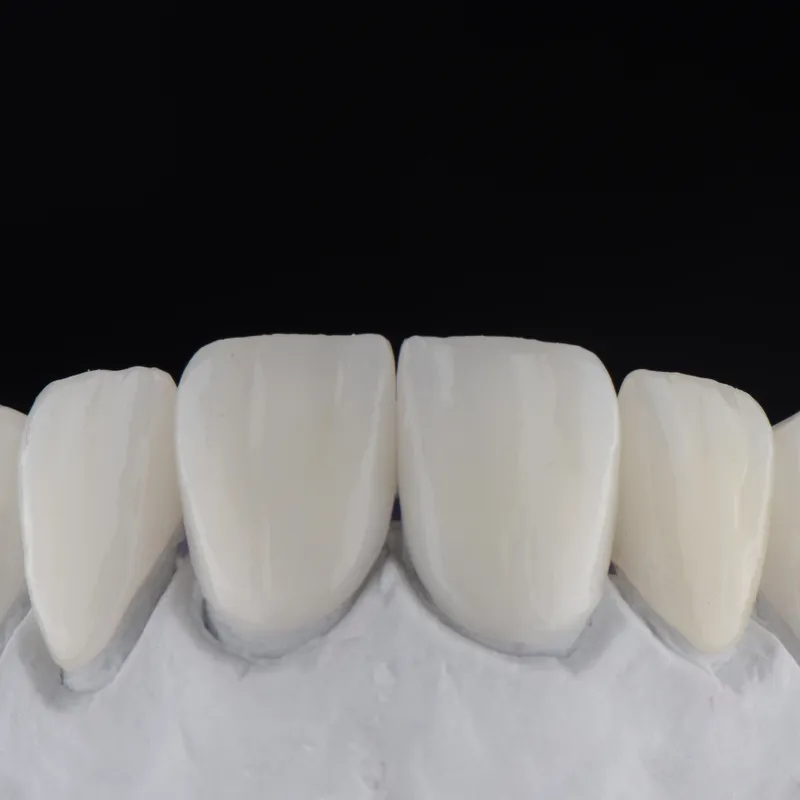
Implant prosthetics is a branch of restorative dentistry focused on replacing missing teeth and restoring dental structures using artificial materials.
Dental prosthetics is needed when one or more teeth are missing, or when there is extensive structural damage to the tooth crown caused by decay, wear, or trauma.
Final restorations are most commonly made from various bioceramic materials, which closely resemble the properties of natural teeth (such as glass-ceramic, zirconia ceramic, feldspathic ceramic, etc.).
Temporary restorations and removable plate dentures are made from various types of dental acrylic or resin-based materials.
Why is it necessary?
Timely and high-quality dental prosthetics help prevent certain undesirable changes within the mouth, such as tooth shifting, bite deformities, or jawbone resorption. Moreover, they ensure even distribution of chewing forces and functionality, restore dental arch integrity, enhance aesthetic appearance, and extend the lifespan of damaged teeth in the mouth.
How does the process of dental prosthetics unfold?
Let's break it down into key stages.
Consultation:
First, the patient undergoes a thorough examination. The dentist assists in selecting the most suitable treatment plan based on the individual situation.
Smile Design:
For extensive dental prosthetic work, particularly involving front teeth, a digital smile design is crafted. In the lab, a model of the anticipated restorations is meticulously prepared. This model can then be transferred to the patient's teeth using temporary materials for assessment.
Tooth Preparation for Prosthetics:
Damaged tooth surfaces are restored using filling materials, and any necessary reshaping is done by grinding. The space required for the prosthesis is digitally captured or taken with specialised impression materials. Temporary restorations are then prepared accordingly.
Measurement and Cementation of Restorations:
Final restorations, meticulously crafted in the laboratory, undergo measurement and evaluation for both aesthetic appeal and functionality. Once their fit is flawless, they are carefully cemented onto the prepared tooth surfaces.
Restoration Care:
It is crucial to maintain prosthetic teeth with care, including the use of toothbrushes, interdental brushes, and floss. Regular visits to the dentist and dental hygienist are necessary to preserve their functionality and appearance.
What are they?
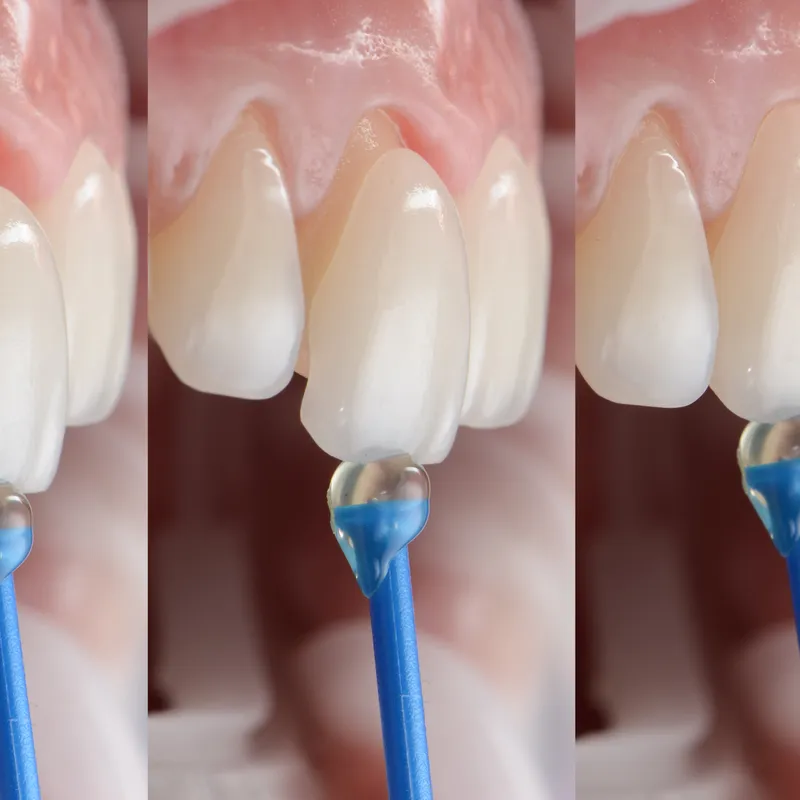
Tai plonos dantų restauracijos, specialiu būdu klijuojamos prie dantų ir paslepiančios jų spalvą, formą ar estetiškai netinkamą poziciją burnoje.
Dantų laminatės paprastai rekomenduojamos pacientams, kurių netenkina esama dantų forma, dydis, spalva ar senos restauracijos, ypač priekinių dantų srityje.
Laminates galima gaminti tiek ant vieno, tiek ant daugiau dantų, kruopščiai priderinant medžiagų, iš kurių jos gaminamos, optines savybes prie natūralių dantų.
Laminatės būna dviejų rūšių: keramikinės ir kompozitinės.
Keramikinės laminatės yra individualiai pritaikytas plonas keramikos sluoksnis, pasižymintis aukščiausiomis estetinėmis savybėmis, dideliu tvirtumu ir ilgaamžiškumu.
Kompozitinės laminatės, gaminamos iš to pačio kompozito, naudojamo ir kitoms dantų plombinėms restauracijoms, yra pigesnės, tačiau silpnesnės ir mažiau atsparios spalviniams pokyčiams nei keramikinės laminatės.
What's the procedure like?
Pirmiausia išsamios konsultacijos metu yra aptariami paciento lūkesčiai, individuali situacija ir galimybės.
Užregistruojami specifiniai biometriniai paciento parametrai, atliekamos fotografijos, siekiant sukurti individualų skaitmeninį naujos šypsenos dizainą, kuris sekančio vizito metu yra pristatomas pacientui.
Dalyvaujant dantų technikų laboratorijai paruošiamas pagal patvirtintą šypsenos dizainą sukurtas modelis, kuris yra tarsi būsimų restauracijų eskizas.
Kito vizito metu dantys yra ruošiami laminatėms. Dažniausiai juos reikia šlifuoti, tačiau viskas priklauso nuo individualios situacijos.
Procedūrų metu paprastai atliekamas nuskausminimas vietiniais anestetikais.
Nušlifavus dantis imami atspaudai ir pritaikomos laikinos laminatės, kol bus gaminamos keramikinės laminatės.
Paruoštos galutinės restauracijos yra matuojamos ir, esant nepriekaištingam tikimui ir estetiniam vaizdui, klijuojamos prie dantų.
Taigi visą procesą sudaro keturi arba penki vizitai.
Atliekant padengimą kompozitinėmis laminatėmis, reikia mažiau vizitų, tačiau šie yra ilgesni.
Taking care of Dental Veneers
Norint išlaikyti puikiai atrodančią šypseną, būtina periodiškai lankytis pas odontologą ir burnos higienistą bei nuolat tinkamai naudoti dantų ir tarpdančių šepetėlius, siūlą.
Dantų laminatėmis reikia rūpintis kaip savo dantimis, siekiant jas išlaikyti kuo ilgiau.
One of the most common methods for restoring lost teeth is implant-supported prosthetics.
What's the procedure like?
After the specified healing period following implantation and once the implants have successfully integrated, the prosthetic process begins. The positions of the implants are recorded using digital methods or impression materials, and the chosen type of prosthesis is created. During additional visits, adjustments are made if necessary, and the prosthesis is secured onto the implants.
How to take care of implant-supported prosthetics?
Just like natural teeth, implant-supported prosthetics require proper at-home care and regular dental check-ups to maintain their function and prevent inflammation of the tissues around the implant. Brushing and flossing are still essential. After the prosthesis is placed on the implant, an individualized care plan for the teeth, gums, and implants is created for each patient.
In certain cases, it is not possible to place a dental implant in the location of a missing tooth. Instead, fixed bridges can be attached to the adjacent teeth.
Procedure Steps:
The patient undergoes a comprehensive examination, during which the dentist assists in selecting the most appropriate treatment option and formulates a treatment plan. The area where the prosthesis will be placed is captured either digitally or using special impression materials. The final restorations are then prepared in a laboratory, meticulously measured, and evaluated for their aesthetic appearance and functionality. Once the fit is flawless, they are securely attached to the teeth adjacent to the missing tooth site.
Restoration Care:
It is crucial to maintain prosthetic teeth with care, including the use of toothbrushes, interdental brushes, and floss. Regular visits to the dentist and dental hygienist are necessary to preserve their functionality and appearance.
To restore the structure of damaged teeth, the latest biomimetic principles are applied, helping to preserve the remaining healthy tissues and vitality, while restoring the natural function and biomechanics of the tooth. Depending on the extent of tooth structure loss, specific restorations such as onlays, inlays, veneers, or crowns are used.
These restorations vary in coverage: inlays and onlays are used to repair moderate to large structural defects in the crowns of molars and premolars. Crowns, which cover the entire surface of the tooth, are used in cases where the posterior and anterior teeth cannot be restored with simpler methods.
For the prosthetic restoration of edentulous jaws, the following options are available:
Removable dentures, which only restore a portion of the chewing force, making it difficult to chew harder foods. During chewing, the denture can press against and traumatise the oral mucosa, causing it to move. While many people manage to adapt to the limitations of removable dentures, some never do.
Implant-supported dentures are more comfortable and restore a significant portion of the chewing force. There are several options for this type of prosthesis: implant-supported dentures, segmental bridge prostheses, or horseshoe-shaped bridge prostheses.
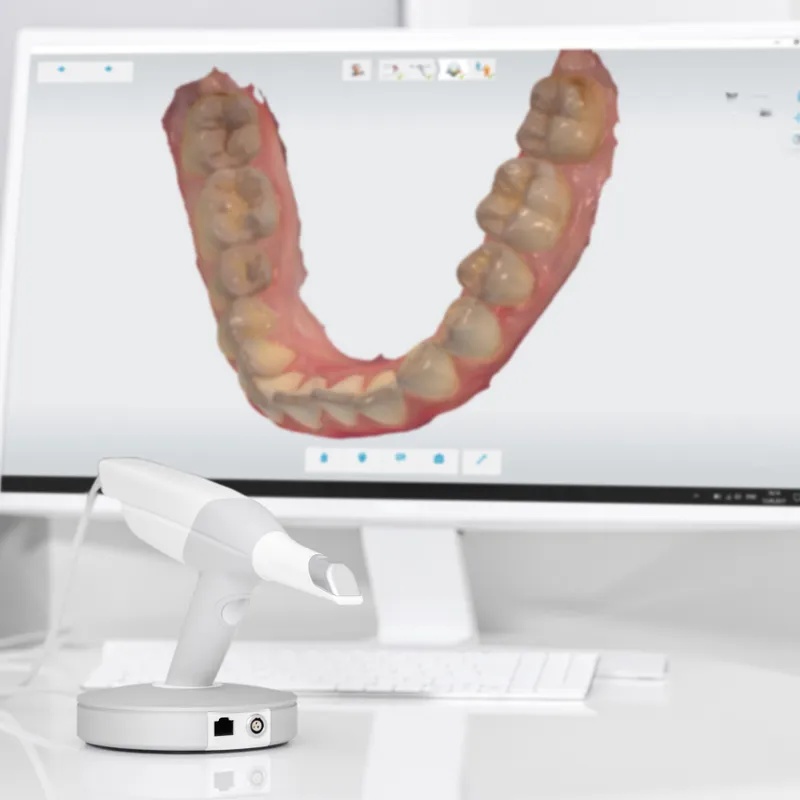
In extensive dental prosthetics, particularly for anterior teeth, a specialized 3D intraoral scanner is employed to scan the patient's mouth, capturing high-quality images of the smile.
These images are then transferred to a dedicated computer program, where a digital smile design is crafted in collaboration with the patient. This approach allows for a preview of the final outcome before treatment commences. Subsequently, in the laboratory, a model of the planned restorations is meticulously crafted. This model, made from temporary materials, is then transferred to the patient's teeth, enabling an evaluation of the anticipated result.
Hybrid ceramic restoration of a lateral tooth: 450€
Zirconia oxide/glass ceramic restoration of a lateral tooth: 539€
Zirconia oxide/glass ceramic restoration of a front tooth: 669€
Feldspathic veneer: 799€
Individual restoration of a front tooth with zirconia oxide/glass ceramic (complex case): 999€
Zirconia oxide restoration of a lateral area implant: 719€
Zirconia oxide and glass ceramic hybrid restoration of a lateral area implant: 790€
Zirconia oxide restoration of a front area implant: 859€
Zirconia oxide and glass ceramic hybrid restoration of a front area implant: 899€
Individual restoration of a front area implant with zirconia oxide and glass ceramic hybrid (complex case): 1049€
 EN
EN  LT
LT